Use case: from MVP to production
From a weekend build to a codebase of your own, one feature at a time.
It reads the code before it touches it.
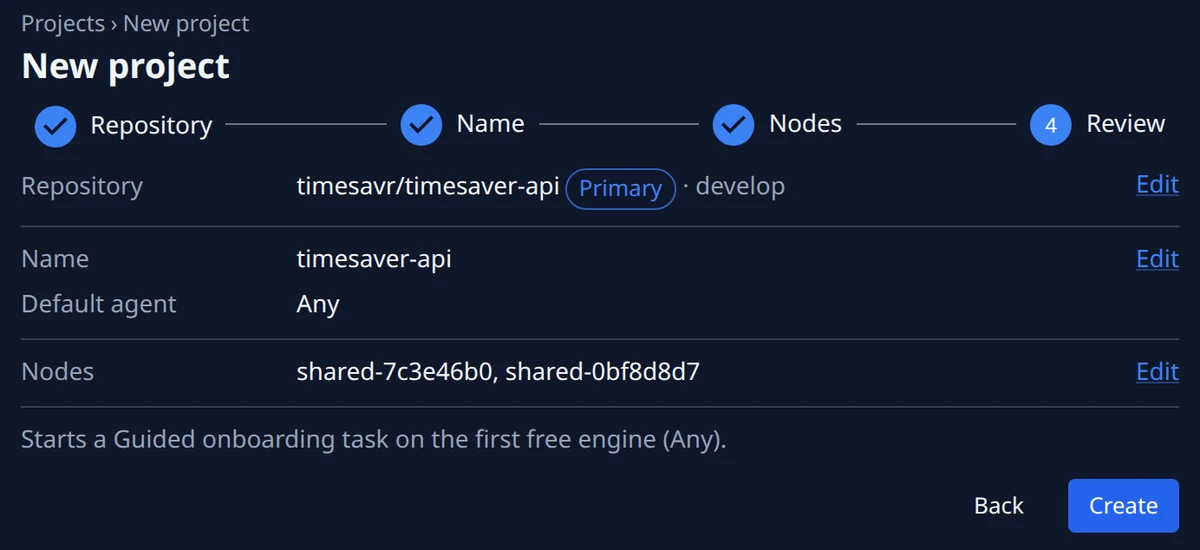
Connect the repository and the first task is the onboarding: Jaah works out how the app runs, writes a map of the code and a guide for the agents, wires the app’s own checks so they run before every change, and sets up a copy of the whole app that runs on its own for each task. Every task after that starts from the same ground.
- A map of the code and a guide for the agents
- The app’s own checks, before every change
- A full copy of the app per task
The security review comes first.
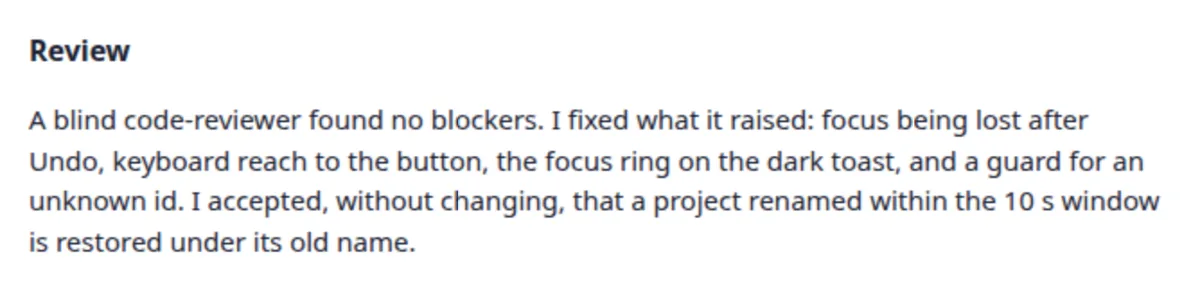
Before anything moves, ask for the biggest security risks in the codebase and get a report: each one ranked, with where it sits and the fix. Ask for a feature map and get every module of the prototype with its code, its place in the new app and its status. Each is a report on the task, to read and to share, and each point it raises is tracked until a reviewer sees it fixed.
- The top risks in the code, ranked, with the fix
- Every module mapped to its place in the new app
- A report on the task, to read and to share
A roadmap with a way back at every step.
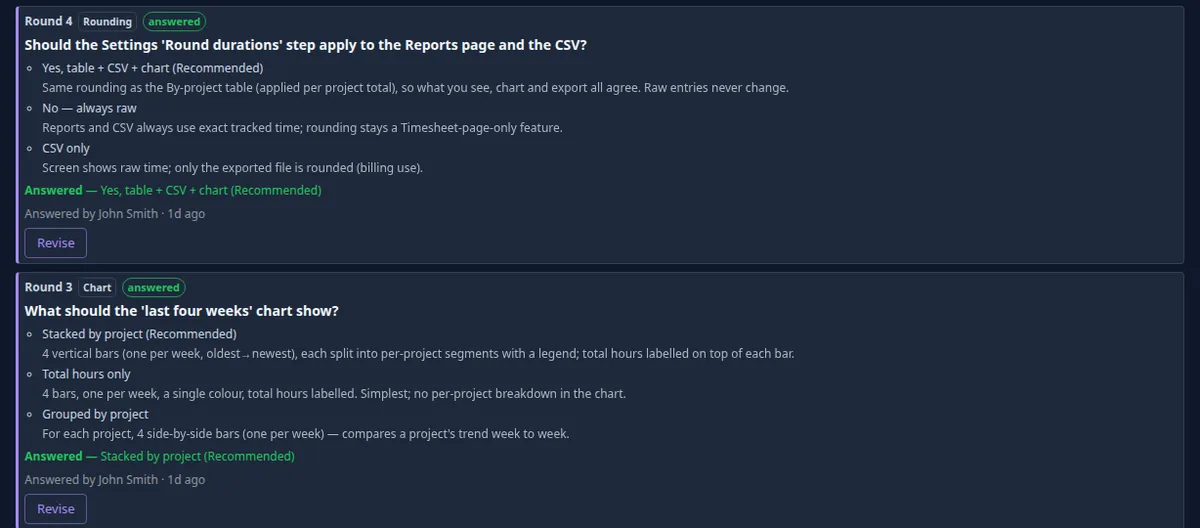
Ask for the migration roadmap and the agent asks you first: what still runs where, which cloud account is the target, who approves each switch-over. The answer is a plan in phases, each with its way back and its risks named, written into the repository where your team and the agents both read it. A person says go at each step.
- Your answers before its plan
- Phases, each with a way back
- A person approves each switch-over
One feature at a time, styled like the new app.
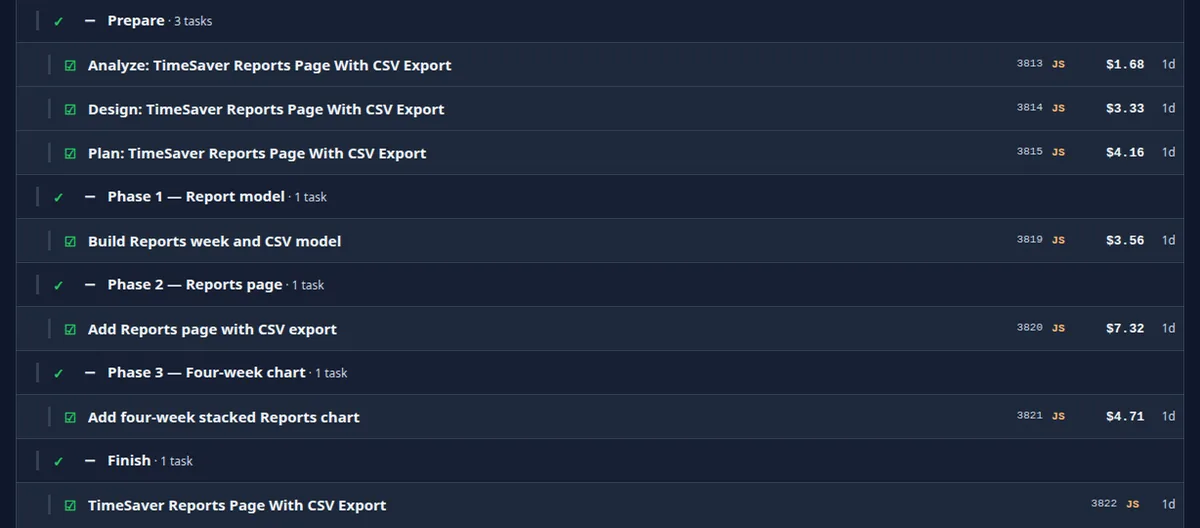
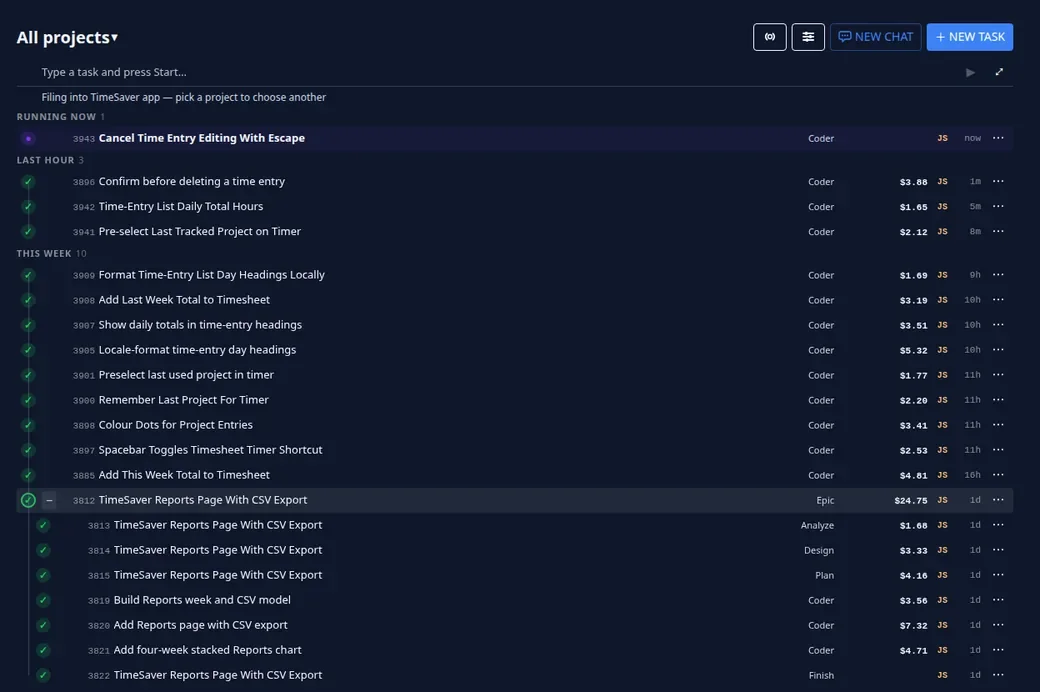
Hand over a feature of the prototype as an epic: the agents analyse it, design its place in the new app, split it into steps and build each one in the style and structure of the code already there. Every change runs the app’s checks, gets a code review and a security review, and is merged into your branch with its report. Your pipeline ships it.
- A feature at a time, split into steps
- Consistent with the code already there
- Tested, reviewed, merged into your branch
The product keeps moving while the move is on.
The same board runs the rest: a competitor study, the requirements for the next feature, the fix a user reported this morning, the dependency updates on a schedule. Your team files tasks in plain words and answers the agents’ questions from Slack or a phone, and the cost and tokens of every task are on the board.
- Features, fixes and research on one board
- Your team asks; the agents ask back
- Cost and tokens per task, live
Use case: from MVP to production
Where it starts, and what comes back.
Any MVP with a repository.
The app arrived from an AI app builder, a contractor or a weekend. The move starts from its code on GitHub, GitLab, Bitbucket or Azure DevOps, and ends in a codebase written for the cloud you choose.
- An app from Replit, Lovable, Bolt or v0, exported to a repository
- A prototype on a hosted database, with real users on it
- One app becoming services on Google Cloud, AWS or Azure, or on the machines you run
- A team of one, or a team that keeps filing tasks
Everything on the record, from the first task.
Each task hands back its result with its report and keeps its transcript, so the move documents itself as it happens.
- A map of the code, with a guide for the agents
- A security review, ranked, with the fixes
- A migration roadmap in phases, each with its way back
- A feature map of the prototype, module by module
- Every feature as a merged change, with its report and its reviews
- The transcript, every command and the cost of each task