The platform
The life of a task, from the ask to the merge.
Describe it once. Get back a finished change.
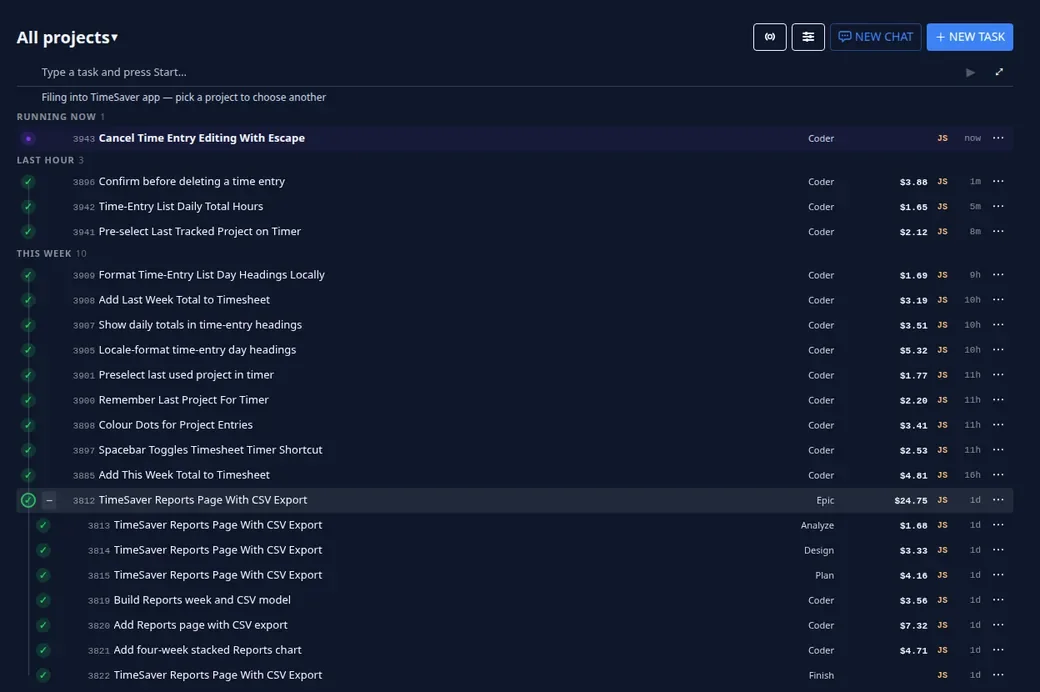
Write the task in a line or a page, and size it: a sketch for a quick mockup, a task for a change, an epic for a feature. An agent picks it up on one of your organisation’s machines, works on its own copy of the code, runs your tests before every commit, and merges the change into your branch once the tests and the reviews pass.
- A sketch, a task or an epic
- Your tests, before every commit
- Merged into the branch you name
You decide how much it decides.
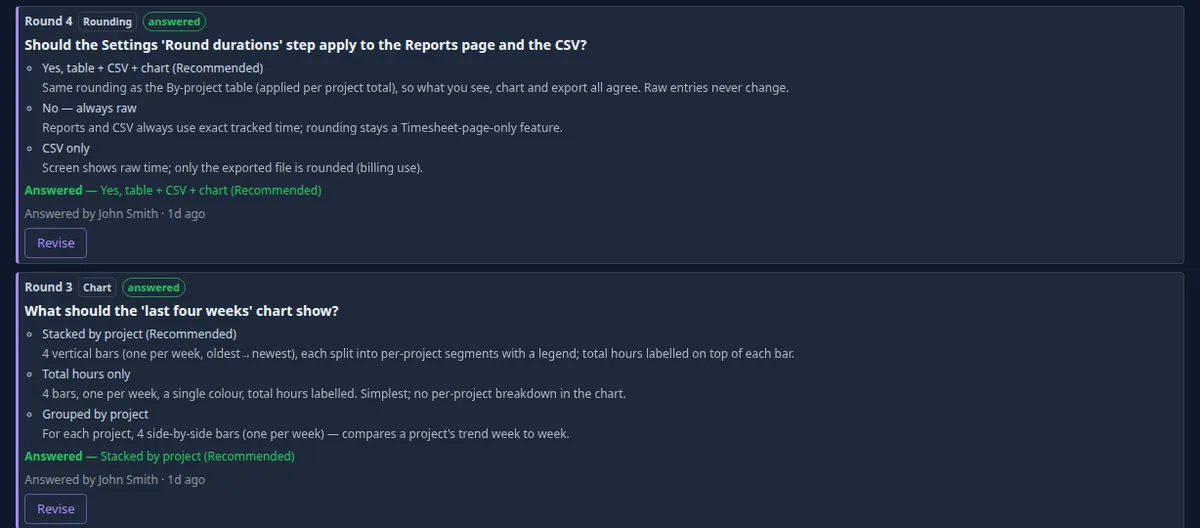
Run a task unattended, or guided: it stops at each real decision with a few options and a recommendation, and the same run carries on from your answer, given in the console or in Slack. Or begin with a chat: talk the idea through with an advisor that has read your project, and it files the task or the epic you agree on.
- Unattended, guided, or a chat first
- Options, with a recommendation
- Answered in the console or in Slack
Five stages, from brief to finished change.
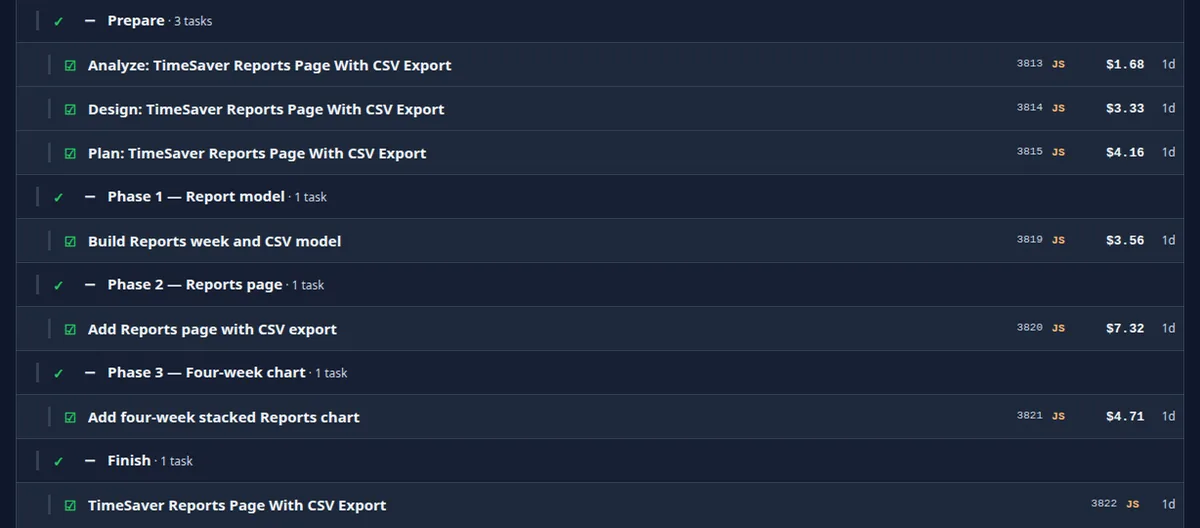
Hand over a feature as an epic. It is analysed, designed and planned, then split into build tasks that each ship their own change, and a finish stage checks the whole against the original ask. And all of it still has to pass your tests.
- Five stages: analysis, design, plan, build, finish
- Each stage hands in a deliverable
- A stage starts when the ones before it are done
A result you can read, from the expert you picked.
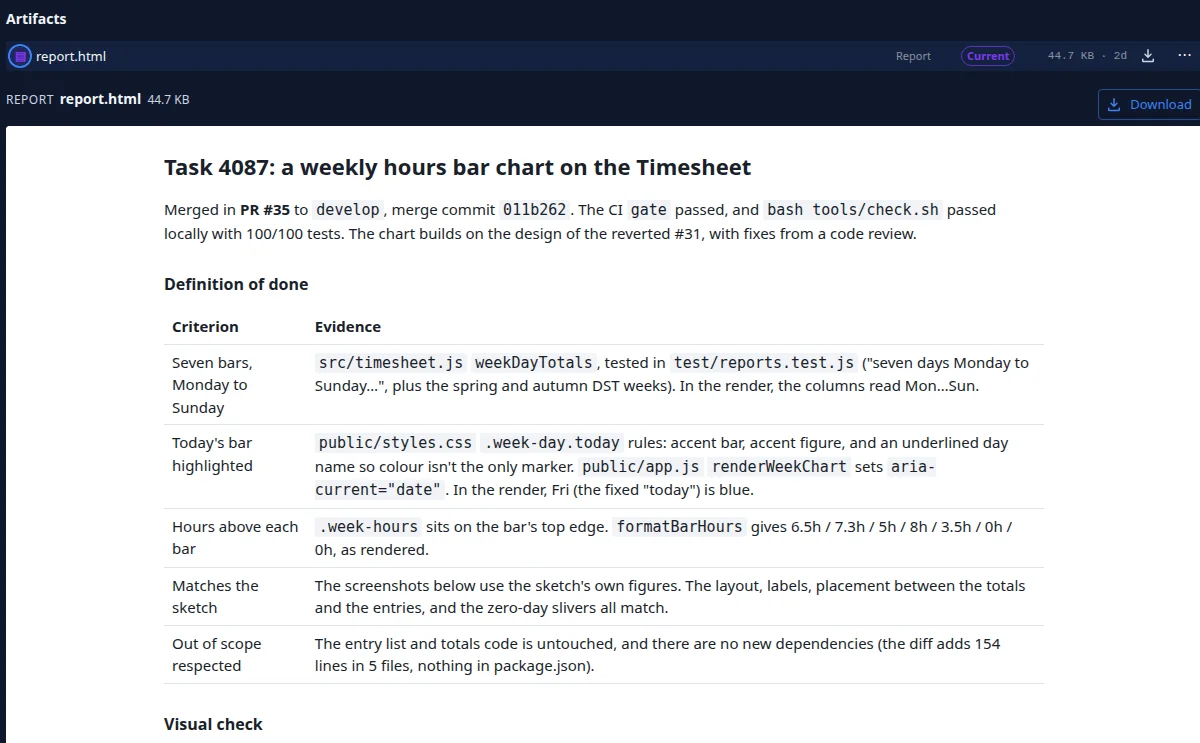
Every task hands back what its expert owes: a coder a merged change, a business analyst the requirements, an architect a design, a researcher a report, a prototyper a clickable mockup. A build’s report says what changed, how each acceptance item was checked, with screenshots of the result, and what the code and security reviews found — written for the person who answers for the change.
- A change, a document, a report or a mockup
- Each acceptance item checked, with screenshots
- Code and security review, cited
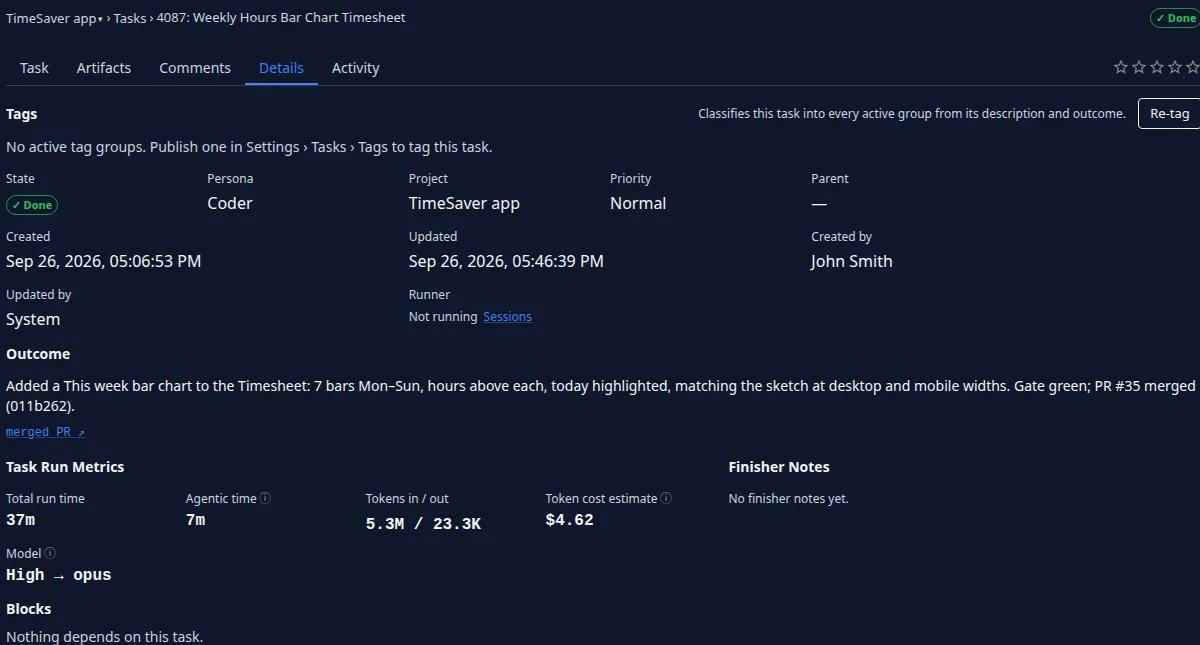
Every task keeps its own history.
Who filed it, the brief, every comment, the full transcript, every command and the merged change — on one page you can open a year later.
- Owner, brief and comments
- Transcript and command log
- The merged change, linked
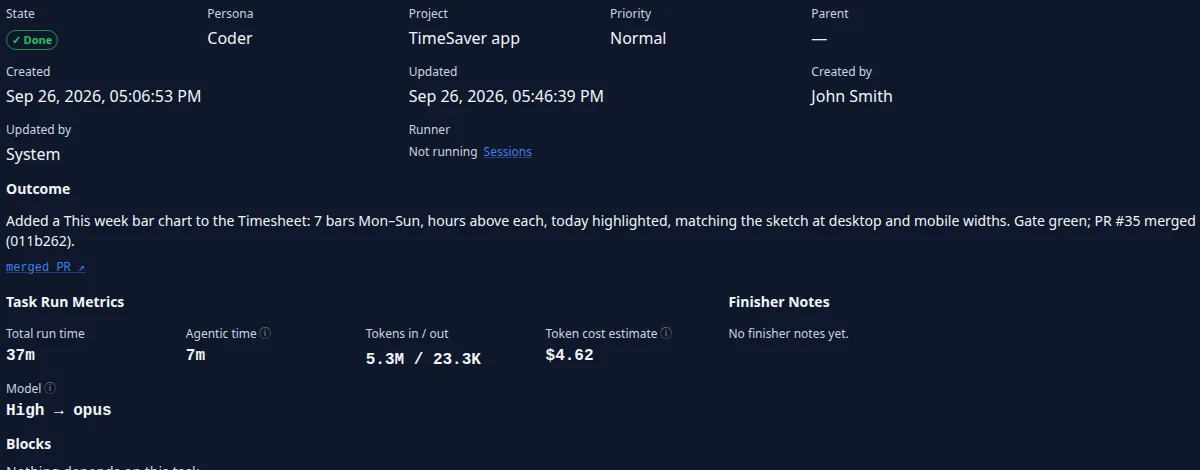
Every token accounted for.
Run time, agentic time, tokens in and out, and cost by model, on every task — so your provider’s bill reconciles against the record, task by task.
- Run time and agentic time
- Tokens in and out
- Cost, by model, per task
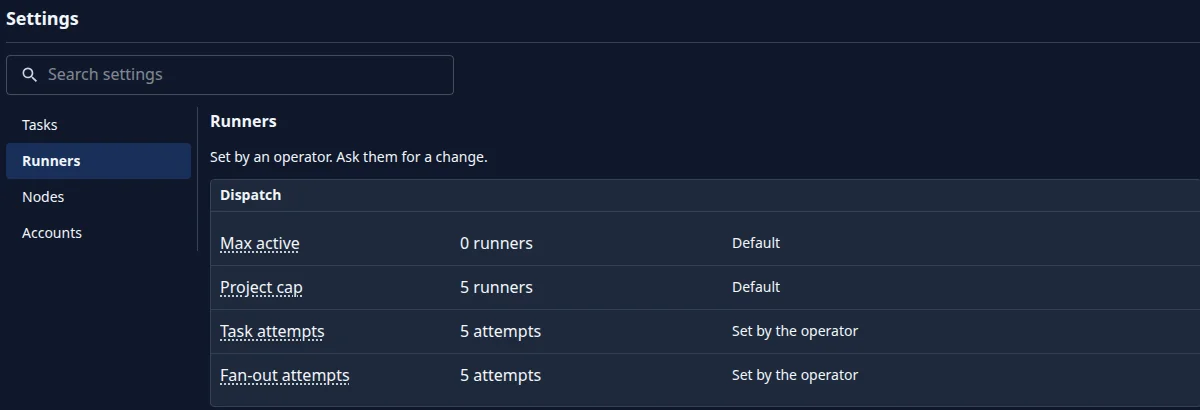
Many agents, side by side, on one machine.
Every running task gets its own copy of the code and its own ports, so agents build and test side by side. A stopped task keeps its copy and picks up where it left off. How many run at once is a cap you set, per project or organisation.
- A private copy of the code per task
- Its own ports per task
- How many at once is your call
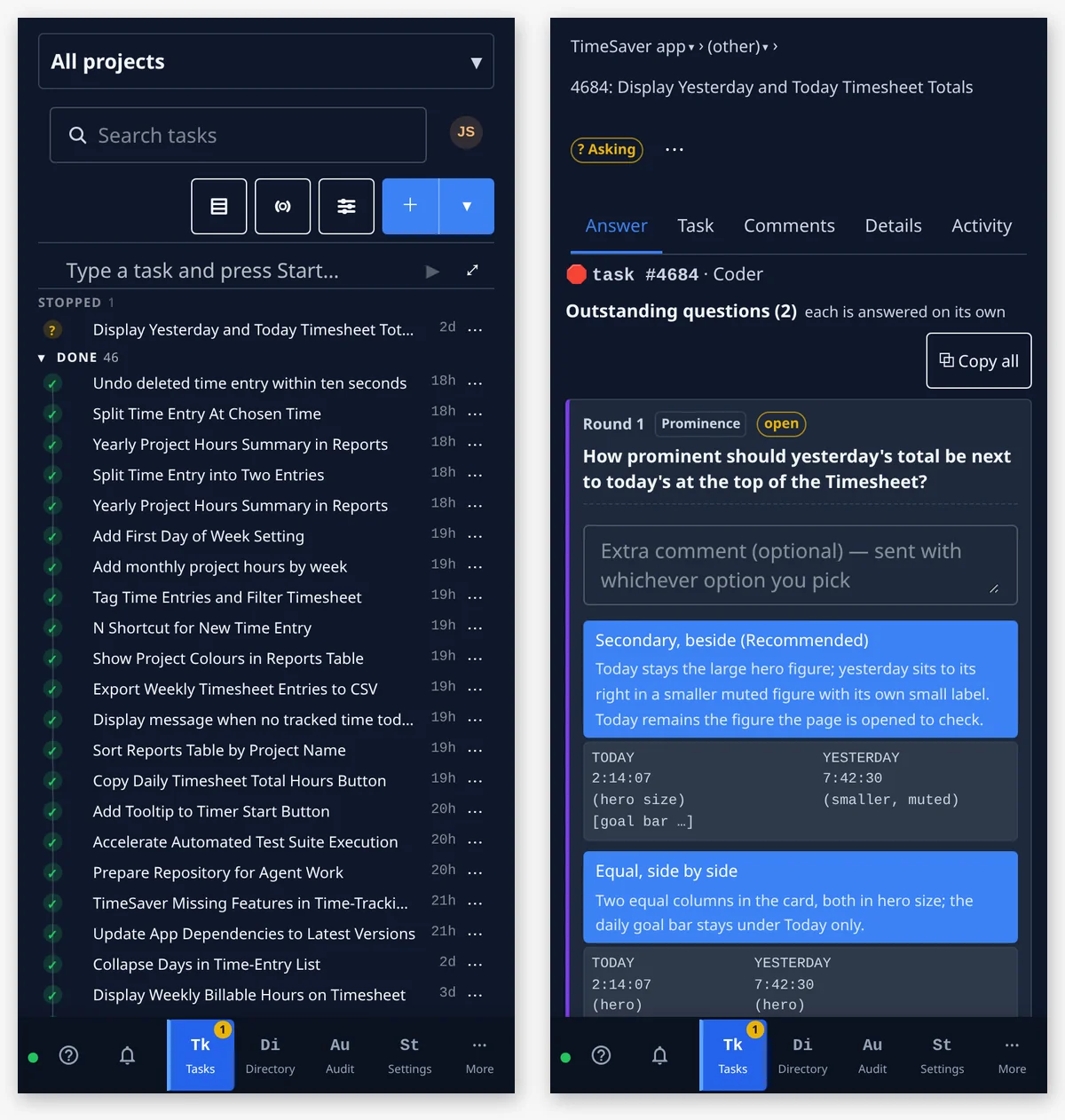
The whole console, in your pocket.
The console runs in any web browser, laid out for the screen in your hand. File a task, answer an agent’s question, watch the board or read a report from wherever you are, and hear about what needs you in Slack or by email.
- The whole console, in any browser
- Laid out for a phone
- Notifications in Slack or by email
Your repositories are next. No statement of work.
Sign up and pick the plan that fits what you build, how you ship today, and which repository would go first.