Agents & engines
Who does the work, on which engine, on whose account.
Bring your own agent. It plays by the same rules.
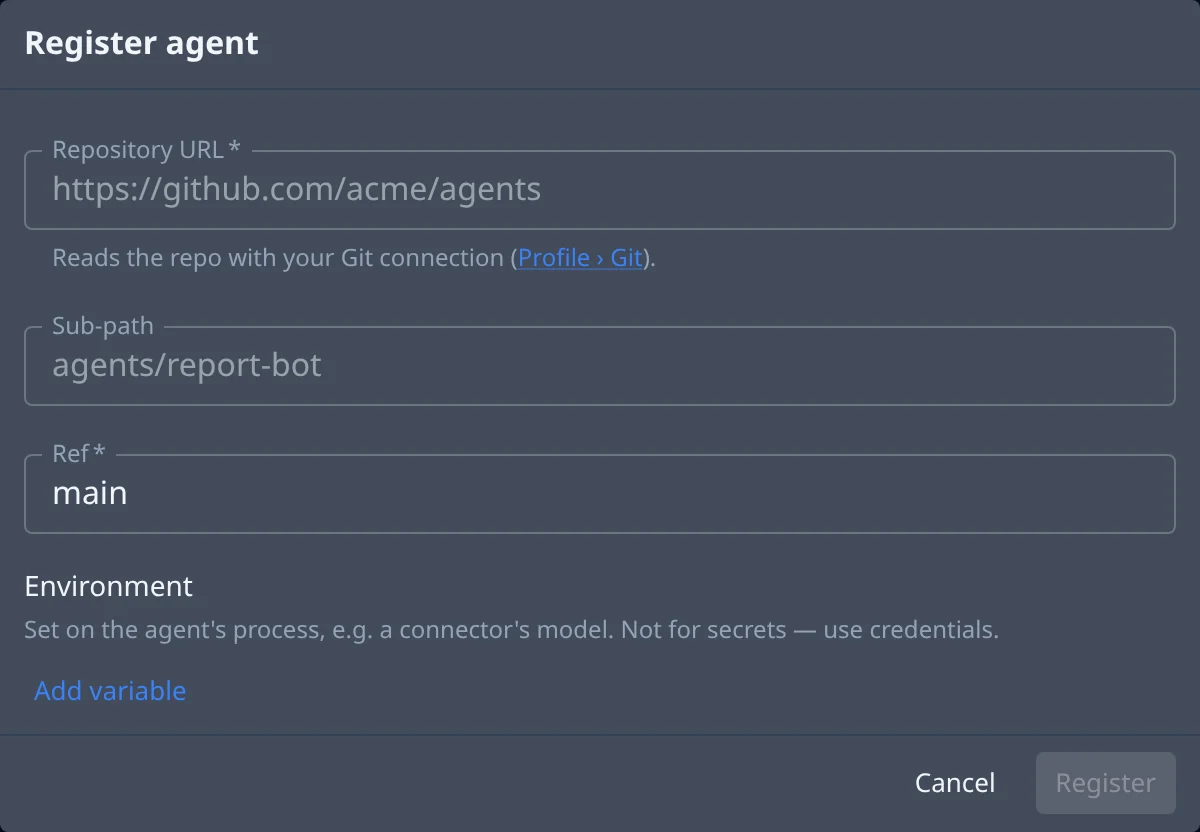
Write an agent in Python or TypeScript with the Jaah Agent SDK, keep it in a GitHub repository and register it: Jaah checks its manifest and pins the commit its ref points at. A task, or a project’s default agent, picks it, and a node runs it in the task’s own copy of the code with the same session log, questions, notifications, credentials and usage as every built-in agent.
- Python or TypeScript, from your own repository
- Pinned to a commit, picked per task or project
- The same log, questions and credentials
Claude, Codex, Gemini, DeepSeek or Pi.
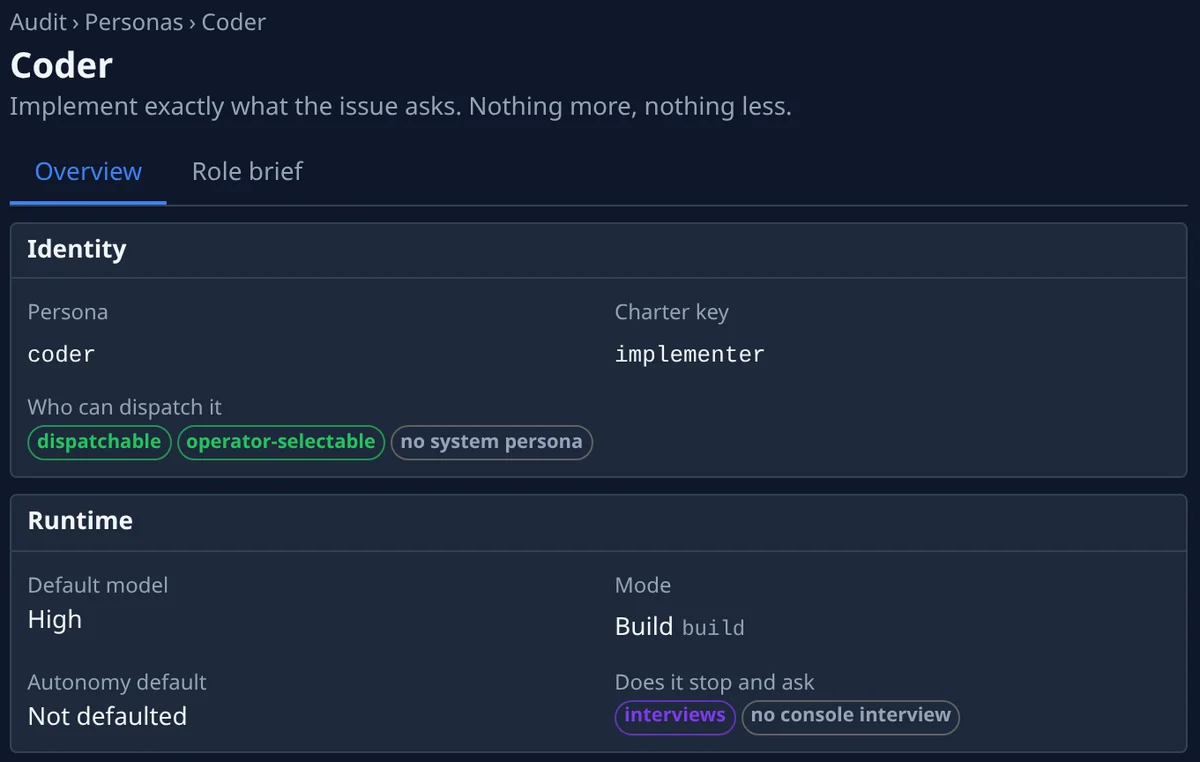
Jaah’s own agents run on the engine you pick: Claude Code, OpenAI Codex, Google Gemini, DeepSeek or Pi. A task names its engine, or leaves the choice to Jaah. Each persona — coder, architect, researcher and the rest — sets how it works: whether it changes code, whether it stops to ask, and the model tier it runs at unless the task sets its own.
- Claude Code, Codex, Gemini, DeepSeek, Pi
- An engine per task, or left to Jaah
- A persona sets its mode and model tier
Playbooks: the stages your team works in.
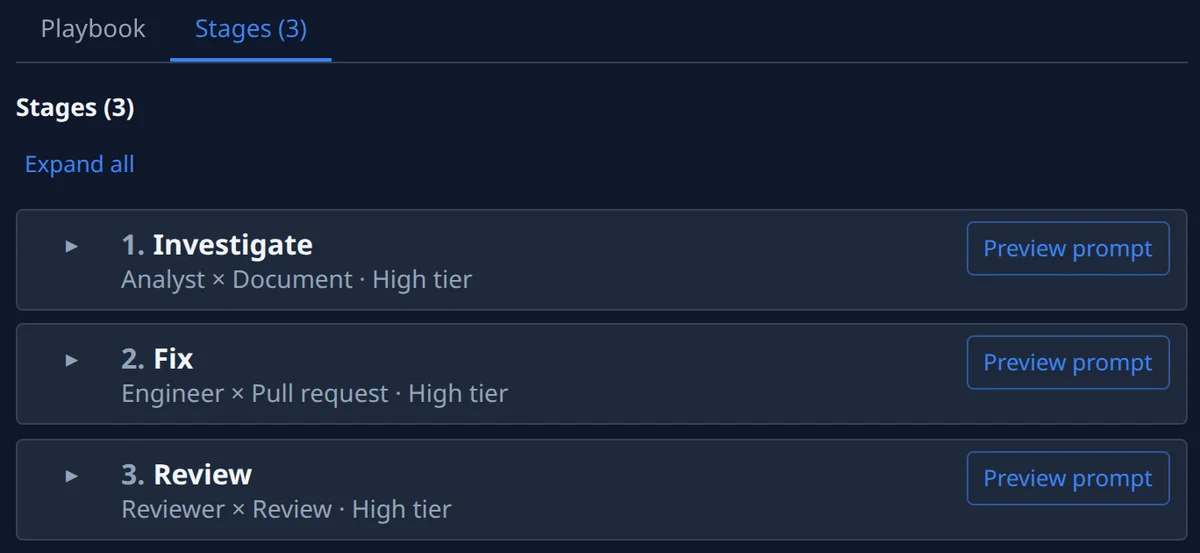
A playbook is an ordered list of stages, each pairing an expert — an analyst, an engineer, a reviewer — with what it hands back: a document, a plan or a pull request. Duplicate a built-in Task, Sketch, Chat or Epic playbook to make it yours, then run it from New task; each stage runs as its own task, at the model tier its seniority sets.
- Each stage: an expert and its deliverable
- Built-in playbooks to duplicate and edit
- A model tier per stage, from its seniority
Your model accounts, at the tier each task needs.
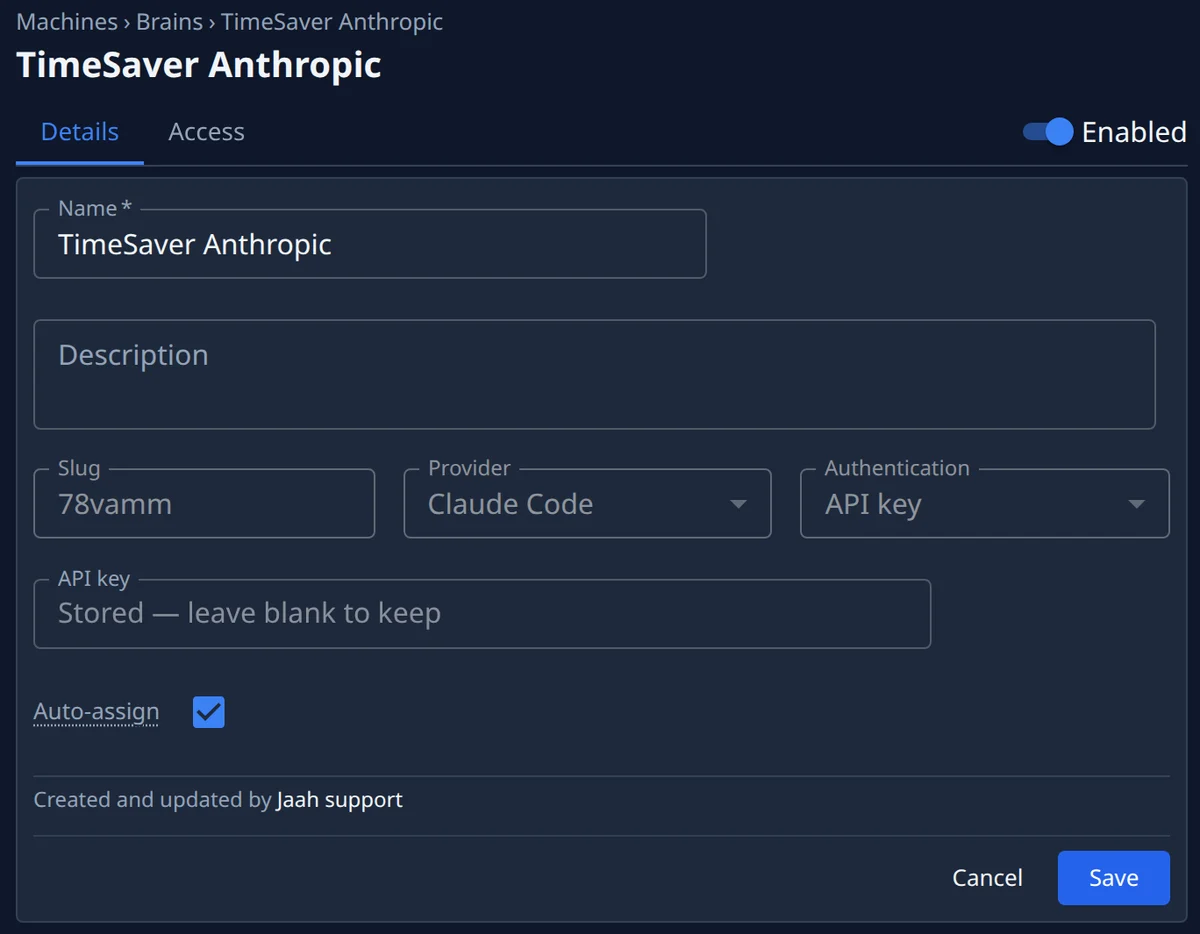
Add the AI accounts the built-in agents sign in as: a subscription signed in on a node, or an API key that runs on any node and is billed per token by the provider. Each run picks an account that is enabled, has room and fits the task, and skips a subscription near its quota until it resets. Set the model tier per task, project or schedule.
- A subscription or an API key
- Quota and health on every account
- A model tier per task, project or schedule
Registry
Agents from the ACP registry.
The public Agent Client Protocol (ACP) registry lists coding agents that speak one open protocol. An org admin installs one for the organisation from Directory › Agents, and it runs like any other agent.
- Installed at a pinned version, never updated on its own
- Downloaded on the node for each task that runs it
- Signed in with an API-key model account you bind to it
- Picked on a task, or made a project’s default agent
- Seen by your organisation alone
Which agent gets your backlog first?
Start free, then pick the plan that fits the agents you would run, the engines they would run on and the accounts they would sign in as.